If your boat is part of your Marco Island dream, the south end should be on your short list. The water, the passes, and the lifestyle all line up, but the details matter more here than almost anywhere. In this guide, you’ll learn how to choose between water direct and water indirect homes, match access to your specific boat, and verify the dock, lift, and permitting details before you write an offer. Let’s dive in.
Why boaters love the South End
The south end of Marco Island fronts Roberts Bay and the Caxambas and Big Marco waterways, giving you fast routes to the Gulf and the Ten Thousand Islands. Caxambas Pass is the nearby opening that most local boaters use to reach open water, and the public Caxambas Park offers on‑island launching, fuel, and a ship store. NOAA’s Coast Pilot notes that local channels are dynamic and benefit from local knowledge, which is one reason wide-water frontage is prized.
Navigation here has a distinct character. Midchannel depths in parts of the Marco and Big Marco system are commonly around 4 feet at controlling points, and shoals can shift after storms. Several highway bridges in the area have tall fixed clearances, with NOAA citing examples around 55 feet, but inner canals and side crossings can run lower and narrower. The result is simple: properties that open directly to Roberts Bay or another wide basin reduce handling and transit time for larger boats.
Local services are boater friendly. Caxambas Park’s repaired boat ramp has reopened, and local reporting notes some changes to commercial-launch rules. You’ll also find fuel and repair at on-island marinas and in nearby Goodland. If you want a quick update on the ramp’s status, review the Caxambas Park reopening coverage.
Water direct vs indirect
Water direct homes dock onto a wide bay or basin, like Roberts Bay, with a straightforward route to a maintained pass or open bay. You avoid threading narrow canals or passing under low fixed bridges, which means faster Gulf access and easier maneuvering for larger or deeper boats. NOAA’s guidance reinforces why these lots are favored for boat handling and dependable routes to open water.
Water indirect homes front a canal that connects to a larger basin or pass. The route may include narrow sections, changing shoals, or lower crossings, and can be shallower depending on the canal. Indirect lots trade a bit more travel and timing for quieter, more sheltered mooring and often lower prices. For a canal-by-canal snapshot of conditions in the area, check regional harbor summaries like Marco and Big Marco River.
Key tradeoffs to weigh:
- Travel time vs protection. Direct access shortens your run and reduces tight maneuvers. Canal homes offer calmer water and a more sheltered berth.
- Draft limits. With controlling depths often near 4 feet in parts of the system, boats drawing over 3 to 4 feet should verify current depths along the entire route.
- Air draft constraints. Tall fixed bridges in the main corridors are high, but side crossings and utilities vary. Confirm the clearance for your full route, not just one span.
- Cost and permitting. Extending or enlarging docks, adding lifts, or dredging frequently requires Collier County and state approvals, and sometimes federal review. The process can be lengthy and conditional under the county’s code and state criteria. See the county’s procedures and criteria for extensions in the Collier County code.
Match your boat to the access
Center consoles under 2 feet of draft
If you run a shallow-draft center console or bay boat, both water direct and water indirect can work well. You gain flexibility on tides and can often navigate canals comfortably. Your focus should be on the specific canal’s depth pattern, turning room at the slip, and the most practical route to Caxambas Pass. You may also value a lift to keep the hull clean and ready to go.
Boats drawing 3 to 4 feet
Plan with precision if your boat’s draft is in the 3 to 4 foot range. In some stretches of the Marco and Big Marco system, controlling depths are commonly around 4 feet, which means your margin at mean low water can be thin. Water direct or wide-basin frontage can reduce risk and timing stress. If you are considering a canal home, require a recent depth sounding from the dock to the maintained channel, and ask about any dredge history along the route as advised in NOAA’s Coast Pilot.
Sailboats and tall towers
Air draft becomes the gating factor for masts and tall towers. While some fixed highway bridges post clearances around 55 feet, side bridges and utilities can be lower and vary by route. Direct bay frontage minimizes surprises and reduces the number of crossings. Before you proceed, confirm the entire vertical and horizontal clearance path from your dock to open water using current local information.
Docks, lifts, and seawalls
Common setups you’ll see
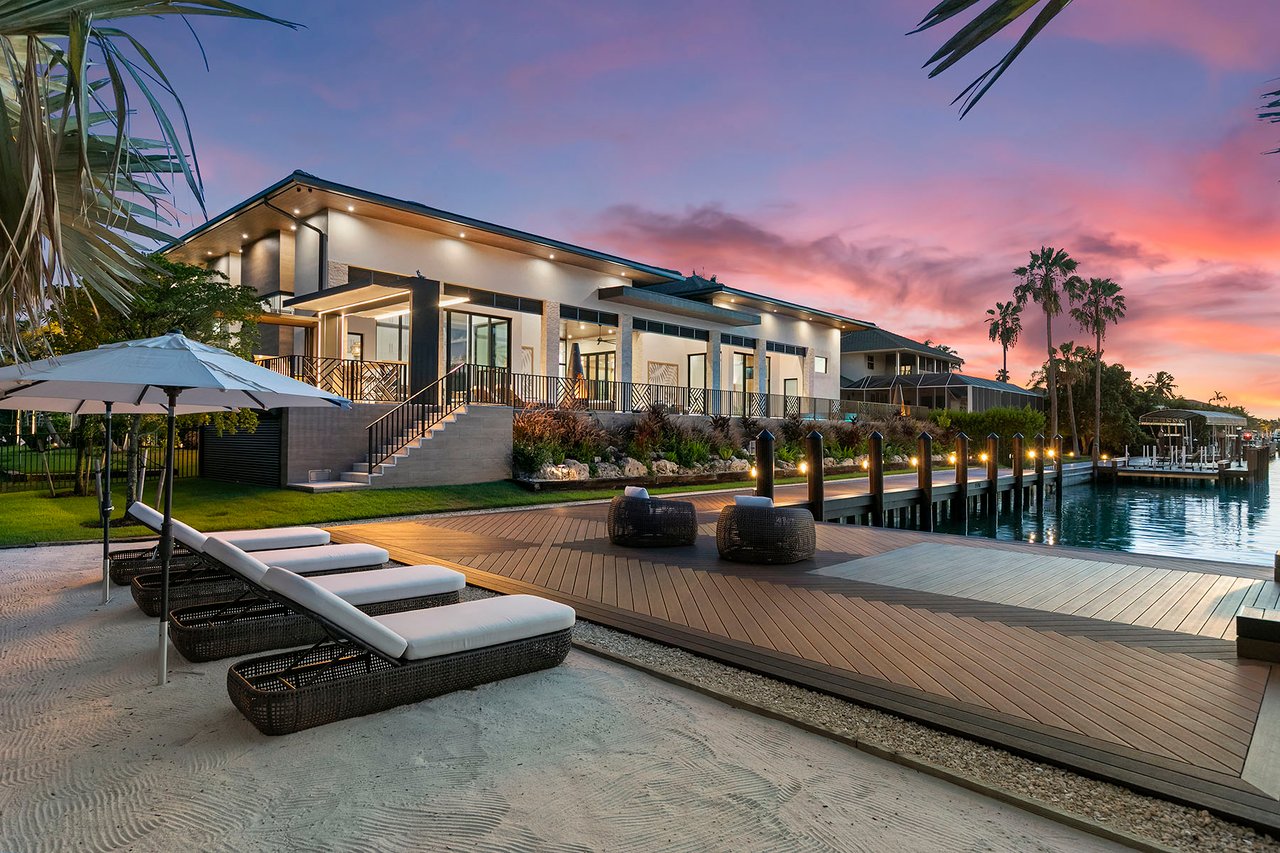
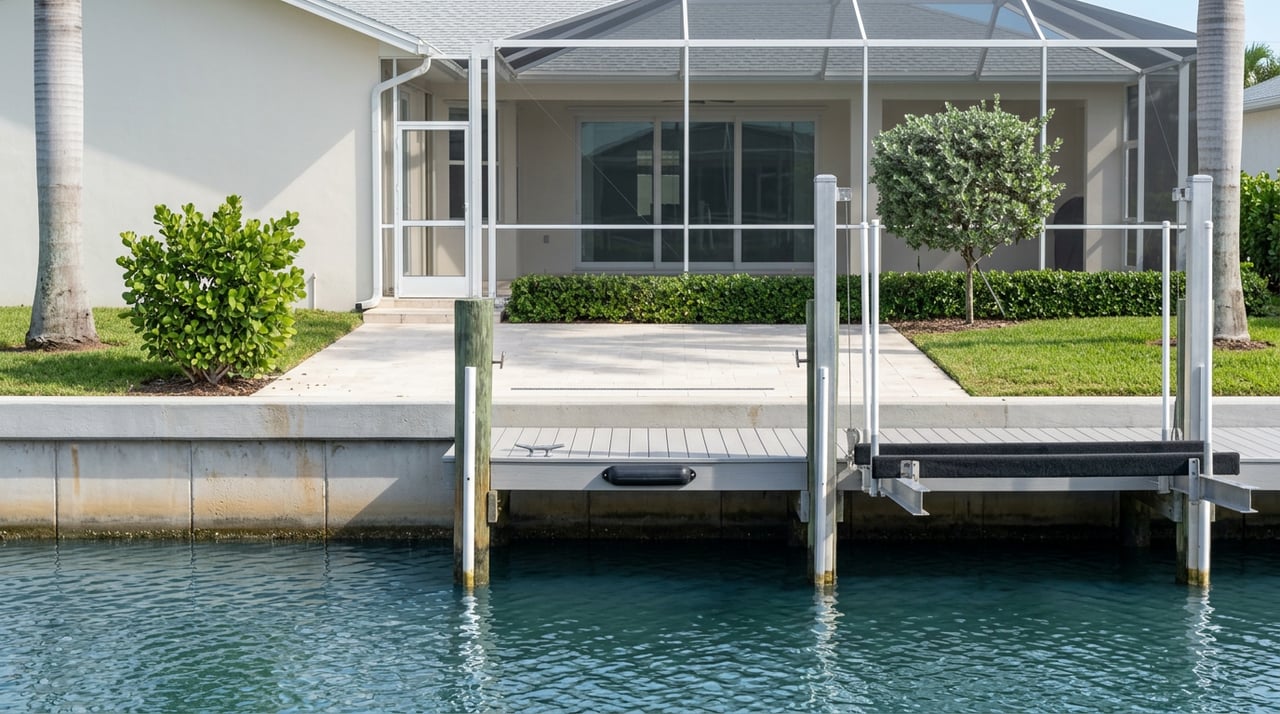
Most south-end waterfront lots have a concrete seawall or bulkhead with finger piers, L- or T-head docks, and often a residential lift. Lifts are common because they simplify maintenance and keep the hull out of the water. Match lift capacity to your fully loaded vessel weight by checking the model’s rating and service history. Manufacturers like ShoreMaster publish capacity ranges for residential lifts, which helps you size correctly, as illustrated in this lift capacity reference.
Seawall condition is a leading maintenance item to budget for. Look for tilt, cracks, or cap separation, and confirm whether any past seawall or dock work was permitted. The county’s records and procedures are outlined in the Collier County code.
Utilities and local service
Many private docks include shore power and potable water. Larger boats may need 50-amp service, so confirm what is installed and permitted. For fueling, pump-out, and travel-lift work, area marinas on Marco and in Goodland are useful backups, with listings aggregated by trusted cruising resources like CruisersNet’s local marinas.
Permits and limits that shape your dock
Collier County regulates how far docks and boats can protrude and has a formal procedure for extensions. Applications typically require surveys showing mean water lines and depths, and the county weighs navigation impacts, water depth, neighboring docks, and environmental protections under primary and secondary criteria. Review the extension process and criteria in the county’s administrative code.
Florida’s aquatic preserve design criteria can add further limits for private single-family docks. Examples from state guidance include caps on total extension, limits on walkway width, size limits on terminal platforms, and requirements that docks terminate in adequate water depth. If aquatic-preserve rules apply, expect additional design standards as outlined in this FDEP presentation.
At the federal level, some small single-family dock repairs and boatlift installs may qualify for self-certification under a State Programmatic General Permit. Projects that do not meet size and design criteria can require an individual authorization from the Corps. You can review program parameters in the USACE SPGP VI overview.
Environmentally, expect careful review where seagrass, mangroves, or bird-nesting habitat are present. The Big Marco Pass Critical Wildlife Area has seasonal protections for shorebirds, and routes near those areas can affect dock design and timing. For current CWA details, see the FWC Big Marco Pass page.
Navigation numbers that matter
- Controlling depth around 4 feet. In parts of the Marco and Big Marco system, controlling depths are commonly in the neighborhood of 4 feet. If you draw more than 3 feet, require current soundings and plan for a safety margin under your keel at mean low water.
- Bridge clearance around 55 feet on main spans. NOAA cites examples of fixed highway bridges with clearances near 55 feet, but you must confirm the entire route, including side bridges and any overhead utilities.
- Dock and vessel intrusion limits. Collier County’s review can consider whether a vessel’s length exceeds 50 percent of the property’s linear waterfront when evaluating extensions. This practical test can influence whether a very large yacht can legally moor at a private dock without a formal extension, as outlined in this overview of dock extensions.
Your pre-offer boating checklist
Before you write an offer, ask your agent to compile and verify these items. Request documents from the seller and pull county and state records as needed.
Permits and title
- Recorded permits for the dock, seawall, and boat lift. Ask your agent to pull Collier County records and, where applicable, verify state and federal authorizations per the county code.
- Any riparian rights, easements, or HOA rules that affect slip use, leasing, or modification. Some communities regulate the number or size of slips. A legal overview of extension considerations can be helpful, like this summary of Florida dock extensions.
Navigation and condition
- A recent depth sounding, ideally within 12 months, from the dock to the maintained channel or pass. If your draft exceeds 3 feet, require an on-site sounding before contract as supported by NOAA’s guidance.
- The last dredge date for any shoal-prone segments along your route and whether private maintenance dredging is allowed or required.
- A seawall condition report and any engineer’s estimate for repair or replacement if older. Confirm all prior seawall or dock work was permitted using Collier County records.
- Boat lift documentation, including make, model, rated capacity, and service history. Verify that the lift rating covers your boat’s fully loaded weight with a manufacturer capacity reference.
Regulatory and environmental
- Whether the property lies within or adjacent to an aquatic preserve or a Critical Wildlife Area. Expect extra state design criteria and seasonal limits in protected zones. For CWA context, see the FWC Big Marco Pass page.
- Which agency authorizations are required if you plan changes. Some small, like-for-like repairs and certain lift installs may qualify under a general permit, while larger projects require standard review. Review the USACE SPGP VI for eligibility basics.
Operations and neighborhood
- Where you will refuel, pump out, and obtain haul-out services. Caxambas Park fuel and ship store are available, and nearby marinas in Goodland and Marco provide backups. For ramp status and rules, check the Caxambas Park reopening report.
- Community expectations around noise, guest boats, and commercial activity. Some public ramps now limit commercial launches, which can affect charter access and neighborhood traffic.
Decision path for south-end buyers
Use this simple framework to narrow your search:
Identify your access profile.
- Draft under 2 feet: wide choice of canal or basin lots. Confirm turning room and route depth.
- Draft 3 to 4 feet: prefer bayfront or wide-basin lots. If canal, demand current soundings and consider tide timing.
- Tall air draft: verify every crossing. Favor open bay frontage to reduce bridge constraints.
Confirm feasibility on site.
- Measure horizontal clearance and turning area at the slip. Check side setbacks and potential intrusion limits.
- Verify lift capacity, service history, and permits. Match to your fully loaded boat weight.
- Assess seawall condition and budget. Confirm permitting history for prior repairs.
Lock in your offer protections.
- Make recent depth soundings, permit pulls, lift specs, and a seawall report part of your offer file.
- If changes are planned, outline required county, state, and federal authorizations in writing before you close.
Work with a data-forward local advisor
If you want your south-end home to work perfectly for your boat, details and documentation win the day. From route soundings and lift sizing to seawall condition and permitting, the right checks up front make your on-water life simple later. For a calm, process-driven purchase with island-specific guidance, connect with Devin Sweazy to map the right properties and confirm the details before you bid.
FAQs
What is “water direct” on Marco Island?
- Water direct typically means your dock opens to a wide bay or basin with a straightforward route to a maintained pass, avoiding narrow canals and low crossings documented by NOAA.
How deep are south-end canals for boats?
- Controlling depths in parts of the Marco and Big Marco system are commonly around 4 feet, and shoals can shift, so you should require recent depth soundings before you commit.
Do I need permits to add a lift or extend a dock?
- Many lift installs and dock extensions require Collier County review and may also need state or federal authorization, with some smaller projects eligible under a general permit.
Where can I launch or refuel near Caxambas Pass?
- Caxambas Park on Marco Island offers a public ramp, fuel, and a ship store, and nearby marinas in Marco and Goodland provide additional services and backups.
What should I check on a seawall before buying?
- Ask for a seawall condition report, look for tilt or cracking, confirm permits for prior work, and obtain repair or replacement estimates to inform your insurance and budgeting.