Marco Island Seawalls: What Waterfront Home Buyers and Sellers Need to Know
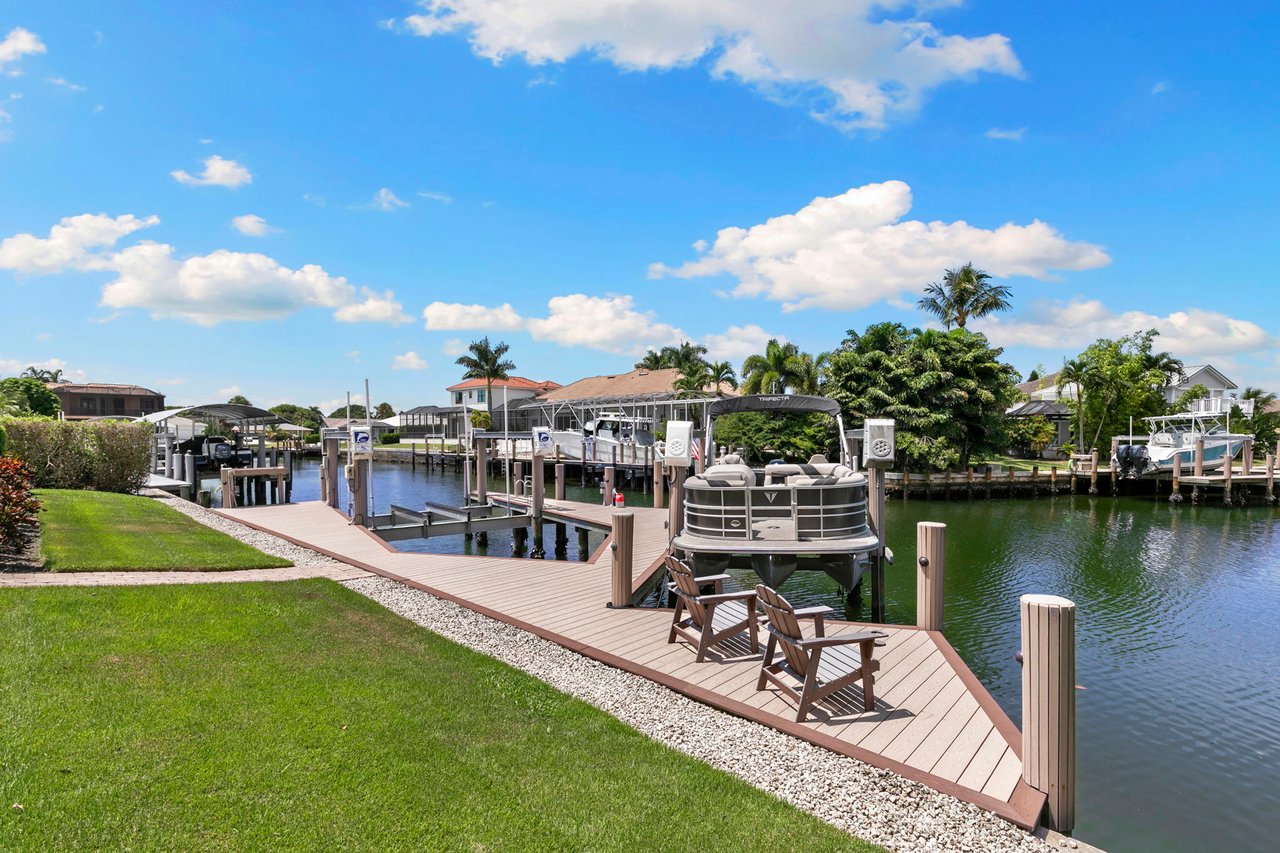
When buying a waterfront home on Marco Island, it is easy to focus on the obvious features: the view, the pool, the dock, the boat lift and how quickly you can reach open water.
But there is another part of the property that deserves just as much attention.
The seawall.
On Marco Island, a seawall is more than part of the waterfront infrastructure. Its age, construction, condition and maintenance history can become an important consideration when evaluating a waterfront property.
For buyers, understanding the seawall before purchasing can help prevent an unexpected expense after closing. For sellers, understanding its condition before listing can help answer buyer questions, reduce uncertainty during inspections and better position the property for the market.
Here is what Marco Island waterfront homeowners and buyers should know.
Why Seawalls Matter on Marco Island
Much of Marco Island's waterfront lifestyle is built around its extensive network of canals, bays and waterways.
A seawall creates the structural boundary between a waterfront property and the water. It helps retain the soil behind the wall and protect the integrity of the waterfront edge.
That makes the seawall an important component of the property, particularly when landscaping, pools, docks and other improvements are located near the waterfront.
The City of Marco Island has specific technical standards governing seawall construction and repair. Site-specific seawall designs are required where applicable, and major repairs and reconstruction must comply with the City's technical specifications.
Not All Marco Island Seawalls Are the Same
One of the mistakes buyers can make is assuming that because two homes are located on the same canal, their seawalls should be viewed the same way.
They shouldn't.
A seawall should be evaluated based on the specific property.
Factors can include:
Age of the seawall
Construction method and materials
Previous repairs
Condition of the seawall panels
Condition of the cap
Tie-back or anchoring system
Soil conditions behind the wall
Drainage
Movement or displacement
Relationship to neighboring seawalls
Waterfront configuration
This is why I encourage buyers to look beyond simply asking, "How old is the seawall?"
Age is useful information, but condition is ultimately what matters.
What Are the Warning Signs of a Seawall Problem?
Some potential issues may be visible during a property showing, while others require evaluation by a qualified professional.
Things that may warrant additional investigation include cracking or separation in the seawall cap, visible movement or bowing, deteriorated concrete, erosion or soil loss behind the wall, depressions developing near the seawall, gaps between seawall components, drainage issues, or separation where adjoining seawalls meet.
None of these observations alone should be used to diagnose the condition of a seawall. When there is a concern, a professional seawall inspection or engineering evaluation can provide a much clearer picture.
Should You Have a Seawall Inspected Before Buying a Marco Island Home?
For waterfront buyers, I generally recommend giving the seawall meaningful attention during due diligence.
A standard home inspection and a specialized seawall evaluation are not necessarily the same thing.
Depending on the property, buyers may want a qualified marine contractor, seawall inspector or Florida-licensed professional engineer to evaluate the waterfront infrastructure.
The goal is not simply to identify whether the seawall is "good" or "bad." It is to understand what you are purchasing.
Useful questions can include:
What is the current condition?
Is there evidence of previous repair?
Are there areas that should be monitored?
Is maintenance recommended?
Is more substantial work anticipated?
Are permits available for previous seawall work?
That information can be particularly valuable when comparing two waterfront homes that otherwise appear similar.
Marco Island Has Specific Requirements for Seawall Work
Seawall repair and replacement are regulated by the City of Marco Island.
For applicable seawall work, plans and specifications must be prepared and sealed by a professional engineer registered in Florida and qualified in seawall and revetment design. The City's permitting process can involve engineering plans, plan review, a pre-permit site visit and final certification by the engineer of record.
The City also requires a pre-inspection before permits are issued for seawall replacement or maintenance projects. That inspection is intended to document existing conditions, including the seawall and adjoining properties, and identify potential drainage concerns.
If a seawall is determined by the City to have failed, Marco Island's code establishes requirements for the owner to address the condition.
Because requirements and permitting procedures can change, homeowners considering seawall work should verify current requirements directly with the City of Marco Island and the appropriate licensed professionals before beginning a project.
Don't Evaluate the Seawall in Isolation
This is where understanding Marco Island waterfront real estate becomes particularly important.
When I evaluate a waterfront property with a buyer, the seawall is only one part of the equation.
I am also looking at:
Water depth.
What kind of boat can realistically use the property?
Canal width.
How comfortable will maneuvering be for a larger vessel?
Bridge restrictions.
Does the property's route to open water include bridges, and if so, what does that mean for the buyer's boat?
Boating access.
How quickly and conveniently can you reach open water?
Dock configuration.
Does the existing dock work for the buyer's intended use?
Boat lift capacity.
Is the lift appropriately sized for the vessel the buyer owns or intends to purchase?
Waterfront footage.
How much usable waterfront does the property provide?
Exposure and view.
Southern, western, eastern and northern exposures can create very different outdoor living experiences.
The seawall.
What are its age, condition, construction and repair history?
A beautiful kitchen can be remodeled.
A dated bathroom can be changed.
But the waterfront characteristics of the property are much harder, and sometimes impossible, to change.
That is why I often tell my clients:
You can change the house. You cannot change the location.
What Marco Island Sellers Should Do Before Listing
Sellers should be thinking about their seawall well before the home reaches the market.
If you have documentation regarding the seawall, gather it.
That may include previous inspection reports, engineering reports, permits, invoices, repair records, replacement documentation or other information regarding work performed.
If there are visible areas of concern, it may make sense to investigate them before listing rather than waiting for a buyer's inspection to introduce the issue in the middle of a transaction.
Today's buyers, particularly at the luxury level, tend to ask detailed questions about waterfront infrastructure.
Being prepared creates confidence.
And confidence matters when selling a waterfront property.
A Seawall Can Be Part of the Value Conversation
When comparing Marco Island waterfront homes, buyers sometimes focus heavily on price per square foot.
That metric only tells part of the story.
Two homes with similar square footage can offer dramatically different waterfront value.
One may have superior boating access, greater water depth, a wider canal, better exposure, a newer dock, higher-capacity boat lifts, a long-water view and well-maintained waterfront infrastructure.
The other may not.
Understanding those differences is one reason hyper-local knowledge matters when buying or selling waterfront property on Marco Island.
Buying a Marco Island Waterfront Home? Look Beyond the House.
The best waterfront purchase is not necessarily the home with the most impressive interior.
It is the property where the house, lot, view, exposure, boating access and waterfront infrastructure work together for the lifestyle you want.
Before purchasing, understand the seawall.
Understand the dock.
Understand the lifts.
Understand the waterway.
And understand what can and cannot be changed after you own the property.
Those details can make an enormous difference in both your enjoyment of the home and how you evaluate its long-term value.
If you are considering buying or selling a waterfront home on Marco Island, I can help you evaluate the property beyond the MLS description and understand the waterfront characteristics that differentiate one home from another.
About Devin Sweazy
Devin Sweazy is a Marco Island Realtor and luxury real estate advisor with Premier Sotheby’s International Realty, specializing in luxury and waterfront homes throughout Marco Island and Southeast Naples.
A Marco Island resident since 2014, Devin combines hyper-local market knowledge with intelligent pricing, sophisticated property marketing, cinematic storytelling and skilled negotiation. With more than $100 million in closed career sales volume, she has been recognized among the top 1.5% of real estate professionals nationwide by RealTrends Verified, is a multi-year member of Premier Sotheby’s International Realty’s Club 1744, recognizing its top advisors, and has been named among the Top 250 agents by Naples Real Producers.
Devin also represented the buyers in Marco Island’s highest-priced residential sale of 2024 at $11.375 million.
To explore Marco Island luxury real estate or discuss buying or selling a waterfront property, visit DevinSweazyGroup.com.