If you are getting ready to sell on Marco Island, one question can shape your entire strategy: should you renovate first or sell the property as is? In a market where buyers have options, the right answer is usually less about doing more work and more about doing the right work. This guide will help you weigh condition, timing, cost, and likely buyer expectations so you can make a smart decision before your home hits the market. Let’s dive in.
Why condition matters on Marco Island
Marco Island’s April 2026 market report showed 557 homes in inventory, 114 average days on market, 98 properties sold, and a median sales price of $1.59 million. That tells you buyers have choices, and when buyers can compare multiple properties, condition tends to matter more.
This is especially important in a higher-price market. Buyers shopping in Marco Island often expect a home to feel clean, well-maintained, and easy to enjoy from day one. If your property looks dated or needs obvious repairs, buyers may still be interested, but they will usually expect that to show up in the price.
National research supports that shift in buyer behavior. The 2025 Remodeling Impact Report found that 46% of buyers are less willing to compromise on home condition than in the past. In practical terms, that means presentation and visible upkeep can have a real effect on how quickly your home sells and how strongly it is priced.
Start with your likely buyer
Before you decide on any project, think about how your home will be positioned in the market. The best pre-listing plan depends on whether buyers will view your property as move-in ready, lightly dated, or a value opportunity.
For higher-end waterfront and luxury homes, buyers often have less tolerance for tired finishes or deferred maintenance. If your home sits in a premium price category, obvious condition issues can narrow your buyer pool and create more negotiation pressure.
For older homes or more modest condos, the answer may be different. A property can still sell well without a full renovation if it is clean, well-kept, and priced to reflect its condition. In those cases, thoughtful updates may make sense, but a major remodel is not always the best use of your money.
Renovations with the strongest resale case
If you do decide to improve the property before listing, focus on updates that are broadly appealing and easy for buyers to notice. In many cases, simple, visible improvements create a stronger resale case than expensive custom work.
According to 2025 South Atlantic Cost vs. Value data, these projects showed some of the strongest resale performance:
- Garage door replacement: 267.7% of cost recouped
- Steel entry door replacement: 216.4%
- Manufactured stone veneer: 207.9%
- Fiber-cement siding: 113.7%
- Minor kitchen remodel: 112.9%
These results point to a clear pattern. Buyers tend to respond well to fresh first impressions, visible maintenance, and modest kitchen improvements with broad appeal.
The Remodeling Impact Report also found that real estate professionals most often recommend:
- Painting the entire home
- Painting one room
- New roofing
That same report showed increased buyer demand for:
- Kitchen upgrades
- New roofing
- Bathroom renovation
Updates that often make sense before listing
On Marco Island, the most defensible pre-listing spending is usually focused on items that improve the home’s overall presentation without overpersonalizing it. That can help your property compete while keeping your budget under control.
Consider updates like these if your home needs them:
- Fresh interior paint in neutral tones
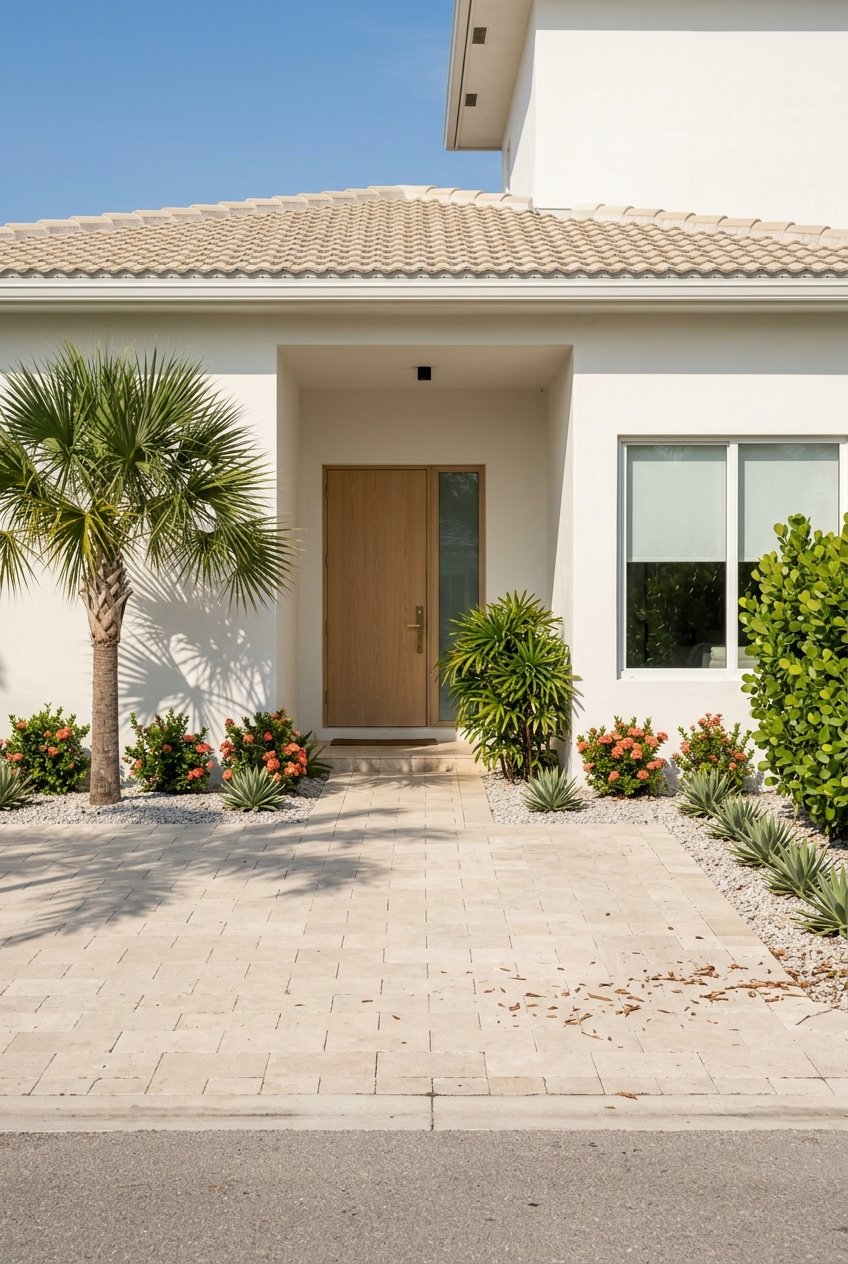
- A clean, updated front entry
- Basic curb appeal improvements
- A minor kitchen refresh instead of a full luxury remodel
- Repairing obvious deferred maintenance
- Addressing roofing concerns if they are likely to affect buyer confidence
These types of changes can help buyers feel the home has been cared for. They also tend to support stronger photos, showings, and first impressions.
Renovations that may be harder to justify
Not every project pays off before a sale. In fact, larger or more customized interior renovations often return less than sellers expect.
The same 2025 South Atlantic Cost vs. Value data showed lower recoupment for several bigger-ticket projects:
- Midrange bath remodel: 80%
- Wood window replacement: 70.1%
- Asphalt-shingle roof replacement: 67.5%
- Upscale bath remodel: 41.7%
- Upscale kitchen remodel: 35.7%
That does not mean these projects never make sense. It does mean you should be careful about investing heavily in upscale finishes or major remodels unless your property is already positioned to capture that premium.
On Marco Island, broad appeal usually wins over personalization. If you spend heavily on design choices that reflect your taste, buyers may not value them at the same level you do.
When selling as is may be the smarter move
Selling as is can be the better strategy when the work is expensive, time-consuming, or likely to uncover more issues once it starts. If a project requires permits, inspections, contractor coordination, or association approval, delays can quickly reduce any pricing benefit you hoped to gain.
Marco Island’s Building Services information notes that projects requiring permits are reviewed and inspected, and the city says a building permit can take 10 to 15 workdays. Minor projects are normally approved, or a request for more information is made, within 5 workdays. Even with remote service options available, permit timing and closeout still need to be managed carefully.
That matters because the permit holder is responsible for completing permits, and outstanding permits may need to be resolved through the estoppel process during closing. If your goal is to get to market quickly, permit-heavy work can create complications that are easy to underestimate.
Selling as is often makes the most sense when:
- Repairs are substantial or costly
- Work may uncover hidden issues
- You own the property remotely and want to limit project management
- The home can be priced clearly to reflect condition
- The likely buyer is comfortable taking on updates after closing
Condo sellers have one extra layer to consider
If you are selling a condo, renovation choices can be even more sensitive. Under Florida Statutes section 718.113, material alterations or substantial additions may require approval under the condo declaration. If the declaration is silent, 75% of the total voting interests may need to approve the work before it begins.
That means a pre-listing renovation that seems straightforward may not actually be simple. Before committing to condo improvements, it is important to understand whether the work requires association review or approval and whether the timeline still supports your selling goals.
For many condo sellers, this is one reason cosmetic cleanup and pricing strategy may be more practical than a larger pre-sale renovation. A clean unit with good presentation can still compete well without creating approval-related delays.
Do not ignore carrying costs and timing
One of the biggest mistakes sellers make is looking only at possible sale price and not at the cost of waiting. If you spend months renovating, the extra carrying costs can eat into your net proceeds.
This is especially relevant for seasonal owners and second-home sellers on Marco Island. Collier County’s Property Appraiser notes that homestead exemption applies only to a permanent Florida residence and must be filed, not assumed to transfer automatically.
If your property is not your permanent residence, every extra month of ownership may come with higher holding costs and no homestead benefit. That makes the real question bigger than, “Will this update add value?” You also need to ask, “Will the delay erase the gain?”
A practical decision framework
If you are torn between renovating and selling as is, keep your decision focused on return, timing, and market positioning. The right answer is usually the one that improves buyer confidence without dragging out your timeline.
A simple framework can help:
Renovate before listing if
- The home needs visible cosmetic help
- Small updates can improve first impression
- Repairs are likely to come up in showings or negotiations
- The property is positioned where buyers expect a more polished presentation
- The work is manageable without major permit or approval delays
Sell as is if
- The property needs major work
- Renovation costs are hard to control
- You may run into permit, inspection, or association complications
- You want to limit carrying costs and time on market
- Pricing the home to condition is more predictable than trying to create a premium
The best Marco Island strategy is usually balanced
For many sellers, the answer is not a full remodel and not a pure as-is sale either. It is a middle path: clean up the home, fix what buyers will notice, avoid over-improving, and price with discipline.
In today’s Marco Island market, that balanced approach often gives you the best shot at protecting your net proceeds. You want buyers to feel good about the property the moment they see it, but you also want to avoid spending money where the return is uncertain.
If you are weighing renovation decisions, the smartest next step is to review your home through the lens of your likely buyer, your timeline, and your expected net. For tailored guidance on pricing, presentation, and whether to update or sell as is, connect with Devin Sweazy.
FAQs
Should I renovate my Marco Island home before selling?
- It depends on the home’s condition, price point, and likely buyer, but smaller high-visibility updates often make more sense than a major remodel.
What renovations add the most resale value before a Marco Island sale?
- Based on 2025 South Atlantic Cost vs. Value data, projects like garage door replacement, steel entry door replacement, exterior-facing improvements, and a minor kitchen remodel showed stronger resale performance.
Is selling a Marco Island property as is a good idea?
- Selling as is can be a smart choice when repairs are extensive, permit-heavy, expensive, or likely to delay the listing long enough to reduce your net proceeds.
Do Marco Island permits affect pre-listing renovations?
- Yes, the city says permits for building work can take 10 to 15 workdays, and projects requiring permits also need review, inspection, and proper closeout.
Do condo renovations on Marco Island need approval before listing?
- They can, because Florida condo rules may require approval for material alterations or substantial additions depending on the declaration and voting requirements.
Do Florida sellers still have disclosures when selling as is?
- Yes, selling as is does not remove a residential seller’s duty to disclose known facts that materially affect value and are not readily observable, and flood disclosure is also required at or before contract execution.